
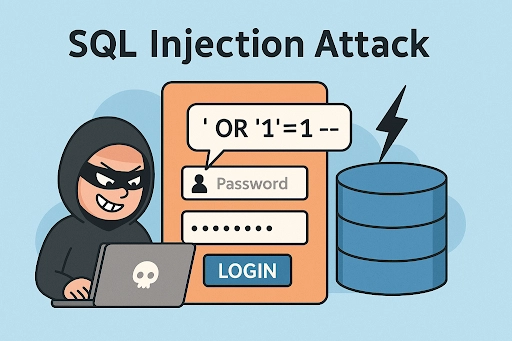
25 Proven Ways to Protect Your Website
From SQL Injection Attacks
SQL Injection is one of the oldest and most dangerous attacks on the internet and despite being well-known for more than two decades, it still causes massive data breaches today. From small blogs to global enterprises, thousands of websites are compromised every year because of a single vulnerable database query.
“SQL Injection is not a ‘beginner’ attack anymore it’s a business-ending vulnerability when exploited correctly.”
In this complete professional guide, you will learn exactly what SQL Injection is, how it works in the real world, why attackers love it, and most importantly how to protect your website using modern, battle-tested defenses used by security professionals.
What Is SQL Injection?
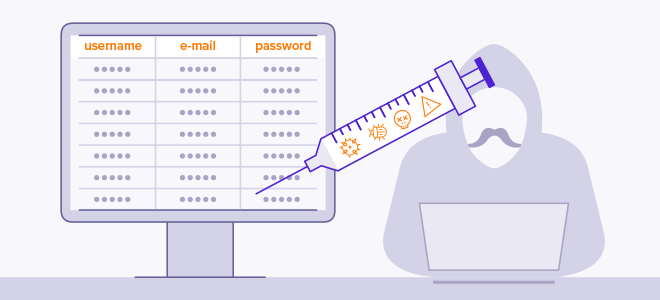
SQL Injection is a web attack where an attacker manipulates a website’s database queries by injecting malicious SQL commands into input fields. When a website does not properly validate user input, the attacker can trick the database into revealing sensitive information, modifying records, or even taking complete control of the system.
In simple terms:
SQL Injection turns a normal form field into a direct communication channel with your database.
Common targets include:
- Login forms
- Search boxes
- Contact forms
- Product filters
- URL parameters
- API requests
Why SQL Injection Is Still So Dangerous
| Reason | Why It’s Dangerous |
|---|---|
| Direct Database Access | Attackers can read, modify, or delete data |
| Silent Attacks | Most SQL injections leave no visible trace at first |
| Automation | Bots scan millions of websites daily |
| Privilege Escalation | Attackers can create new admin users |
| Full System Takeover | Some injections lead to server-level compromise |
How SQL Injection Works
Imagine a website that checks login credentials like this:
SELECT * FROM users WHERE username = ‘input’ AND password = ‘input’
If the developer does not sanitize inputs properly, an attacker could inject logic into the query and force the database to ignore authentication entirely The result? Instant unauthorized access
Real-World Damage Caused by SQL Injection
SQL Injection has been responsible for:
- Mass data breaches of millions of users
- Large-scale identity theft
- Financial fraud
- Regulatory fines
- Permanent reputation damage
“One vulnerable query is enough to destroy an entire business.”
25 Proven Ways to Protect Your Website From SQL Injection
1. Always Use Prepared Statements (Parameterized Queries)
Prepared statements separate SQL code from user input completely. This alone eliminates over 90% of SQL Injection vulnerabilities.
2. Never Use Dynamic SQL With User Input
Building SQL queries by concatenating strings is extremely dangerous.
3. Use ORM Frameworks Whenever Possible
ORMs like Eloquent, Hibernate, and Sequelize handle query binding securely.
4. Sanitize and Validate All Input
Never trust anything from users, APIs, cookies, or GET/POST parameters.
5. Enforce Strong Database Permissions
Your application should never connect as a root-level database user.
6. Disable Dangerous Database Functions
Functions like LOAD_FILE or xp_cmdshell should be disabled if not required.
7. Use a Web Application Firewall (WAF)
Services like Cloudflare and enterprise WAF solutions block SQL payloads in real time.
8. Apply Input Whitelisting (Not Only Blacklisting)
Allow only expected characters instead of blocking bad ones.
9. Monitor Database Query Logs
Abnormal queries are often an early sign of injection attempts.
10. Disable Error Display in Production
SQL error messages reveal your database structure to attackers.
11. Escape Output Properly
This prevents chained attacks like SQLi + XSS.
12. Keep All CMS, Plugins & Frameworks Updated
13. Secure API Endpoints
14. Apply Rate Limiting on Input Forms
15. Use HTTPS Everywhere
16. Harden Your Server Configuration
17. Separate Application and Database Servers
18. Enforce Strong Authentication for DB Access
19. Block Suspicious User Agents Automatically
20. Disable Unused Database Accounts
21. Use Read-Only Queries Where Possible
22. Regularly Scan With Vulnerability Scanners
23. Conduct Penetration Tests Regularly
24. Backup Databases Securely & Frequently
25. Hire a Professional Security Team for Audits
“Automated tools find problems. Human experts understand how attackers think.”
Common Myths About SQL Injection
| Myth | Reality |
|---|---|
| “My website is too small” | Small sites are hit first because they’re easier |
| “I use a CMS, so I’m safe” | Plugins introduce most SQL vulnerabilities |
| “Hackers target only banks” | Automated bots target everything |
How Professional Security Teams Detect SQL Injection
- Manual payload testing
- Logic-based injections
- Time-based injections
- Error-based injections
- Blind SQL techniques
- API injection testing
Professional Protection Strategy (Used by Security Experts)
Security is not a single tool. It is a layered defense system.
- Secure Development Practices
- Firewall Protection
- Server Hardening
- Continuous Monitoring
- Penetration Testing
Final Word
SQL Injection remains one of the most destructive attacks because it directly targets the heart of your website the database. It doesn’t need fancy malware. It doesn’t require advanced infrastructure. It only needs one vulnerable query.
The good news? SQL Injection is also one of the easiest attacks to prevent when proper security controls are in place.
Prevention is always cheaper than recovery.
Need Professional Protection Against SQL Injection?
If you want your website tested by real cybersecurity professionals, including full SQL Injection vulnerability assessment and penetration testing, our team at:
Contact our specialists directly:
We help businesses detect SQL Injection vulnerabilities, remove exploitation risks, and secure their databases before data is lost.